
Oct 28, 2026plushies
Fun Facts About Stuffed Animals: The First, Biggest, and Most Expensive
Explore surprising stuffed animal facts, from an early felt elephant to the world’s largest teddy bear and a Steiff bear that sold for €213,720.
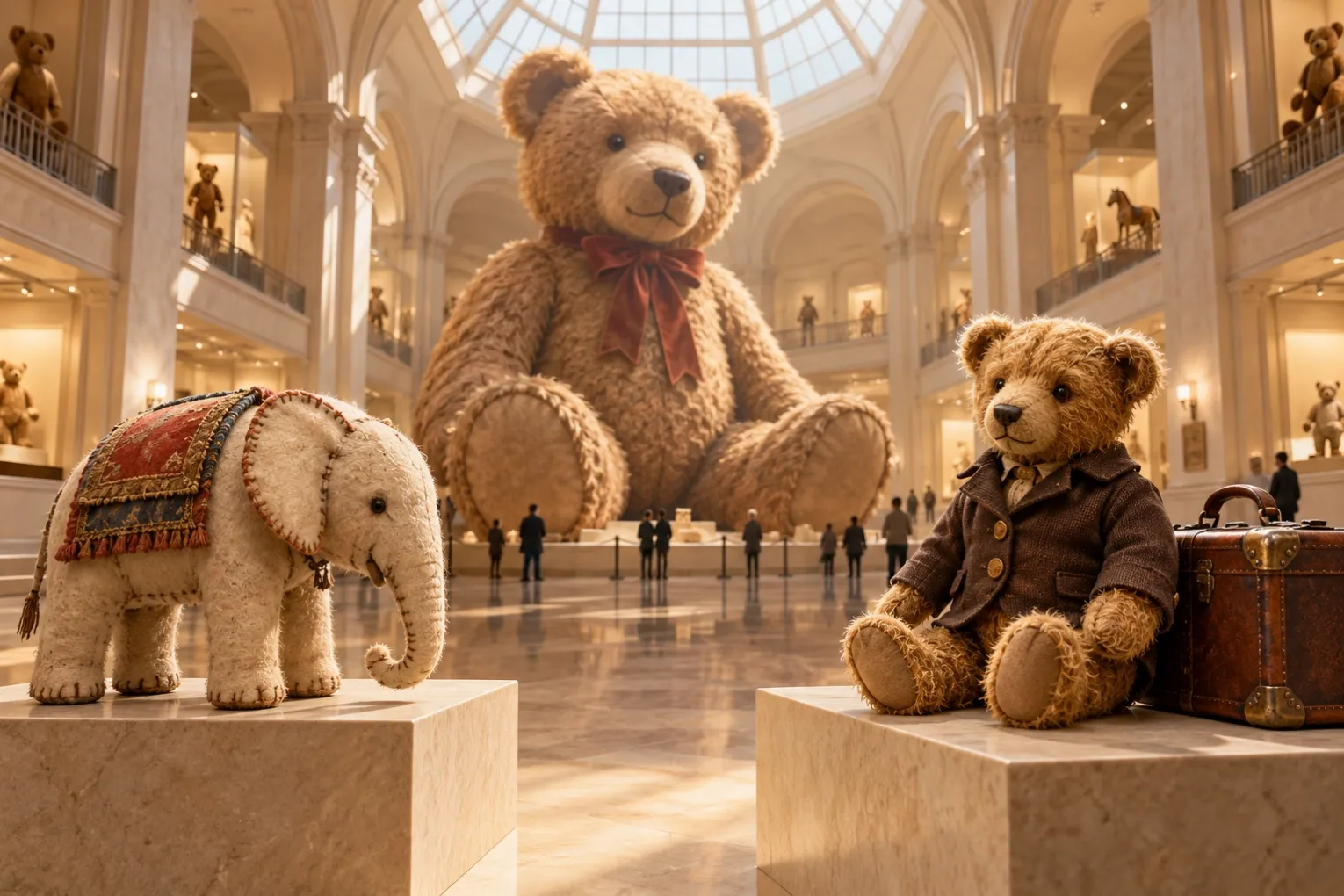
Most stuffed animals are small enough to sit on a bed. One record-breaking teddy bear needed a stadium.
And while a favorite childhood toy might be priceless to its owner, another bear has an actual auction price attached to it: €213,720.
The history of stuffed animals has a few surprises. It includes a little elephant originally made for sewing, a toy named after an American president, and projects that take plush-making far beyond the ordinary.
Here are three stories worth knowing.
1. What Was the First Stuffed Animal?
You might expect the story to begin with a teddy bear. An important chapter actually starts with an elephant.
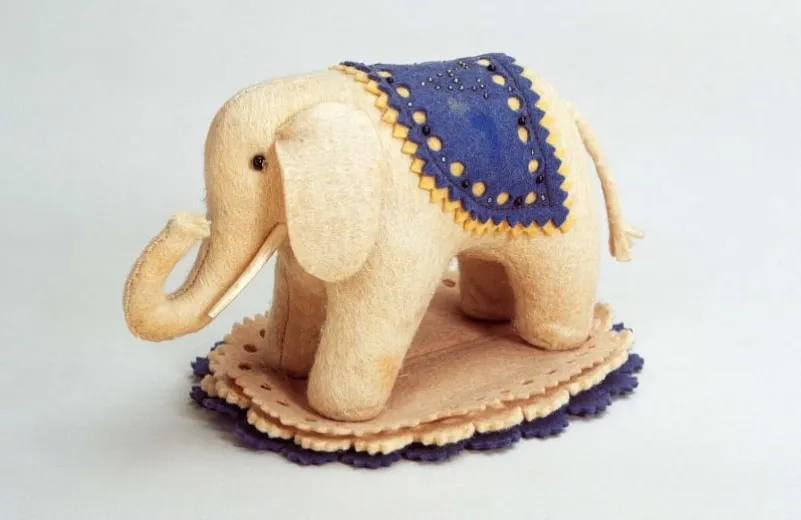
In 1880, German seamstress Margarete Steiff made a small felt elephant called the Elefäntle, using a pattern she had seen in a fashion journal.
It was intended to be a pincushion. Children, however, had a different use for it: they wanted to play with it.
According to Steiff’s official history, the elephant became a popular children’s toy and was followed by a growing range of fabric animals. Read Steiff’s company history.
Was It Really the First Soft Toy Ever Made?
“First stuffed animal” sounds like a simple title, but it needs some care.
Identifying the first handmade stuffed toy anywhere in the world is difficult. Steiff’s elephant is better understood as a documented milestone in the development of commercially produced soft animal toys.
It also was not made from the fluffy plush fabric many people associate with stuffed animals today. It was a small felt creation whose popularity helped establish a business.
That is perhaps the most interesting part of the story: a product designed for one purpose found its audience somewhere else entirely.
When Did the Teddy Bear Arrive?
The teddy bear followed in the early 1900s.
Steiff dates Richard Steiff’s development of the 55 PB, a plush bear with movable arms and legs, to 1902. It was presented at the Leipzig Spring Fair in 1903. Explore Steiff’s teddy bear timeline.
In the United States, Rose and Morris Michtom created a toy bear inspired by a cartoon about President Theodore Roosevelt’s refusal to shoot a captured bear during a 1902 hunting trip. The name “Teddy’s Bear” connected the toy to Roosevelt. Read the National Park Service’s account.
The teddy bear’s early history therefore has important stories on both sides of the Atlantic.
2. What Is the Biggest Teddy Bear in the World?
Imagine looking across a sports field and seeing a teddy bear large enough to dominate the view.
The Guinness World Records listing for the largest teddy bear records a bear measuring 19.41 metres in length, or approximately 63 feet 8 inches.
The record was achieved in Xonacatlán, Estado de México, Mexico, on 28 April 2019. The bear was displayed at a local stadium during an event promoting Children’s Day in Mexico. View the official Guinness record.
It Was a Real Stuffed Bear
This was not an inflatable bear or a rigid sculpture covered in fabric.
Guinness states that it was made using the same types of materials as a commercially available teddy bear. Its details included a dress, tiara, eyes, and nose.
The measurement deserves attention, too: 19.41 metres is the recorded length, not a standing height.
At that scale, familiar plush-making tasks become unusual construction challenges. Pattern pieces, assembly space, filling, and moving the finished object all need a different approach.
For most custom plush projects, “large” means something that takes up an armchair. This one needed rather more room.
3. What Is the Most Expensive Teddy Bear?
A teddy bear does not need to be enormous to set a record.
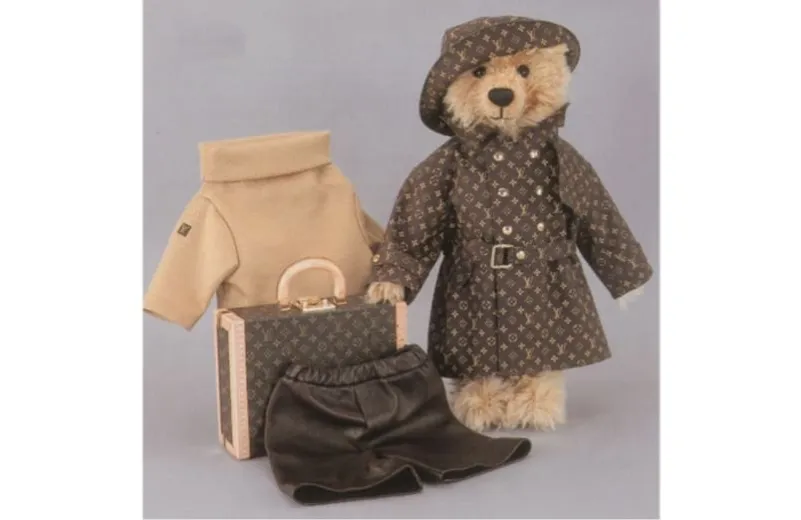
According to Guinness World Records, a Steiff Louis Vuitton teddy bear sold for €213,720 at Christie’s in Monaco on 14 October 2000.
The bear was made in 2000 and measured 45 centimetres, or about 17 inches. View the official Guinness record.
That makes for a striking comparison: the largest bear in this article was measured in tens of metres; the auction record-holder was small enough to carry.
Why Can a Teddy Bear Cost So Much?
Collector prices are different from ordinary retail prices.
A buyer may consider a maker’s reputation, rarity, condition, documented history, or a connection to a particular designer. At auction, the final price also depends on what bidders are willing to pay on that day.
The record does not mean an ordinary plush toy of similar size should cost anything close to that amount. It shows that some teddy bears are valued as collectible objects rather than everyday toys.
When comparing expensive stuffed animals online, it is worth asking one question: is that a completed sale or simply an asking price?
A seller can list an object for an extraordinary amount. A documented auction result tells a different story.
The Three Stories at a Glance
Story | Toy | Key detail |
|---|---|---|
An early commercial soft-toy milestone | Steiff Elefäntle | A felt elephant made in 1880, originally intended as a pincushion |
Largest teddy bear listed by Guinness | Bear made in Xonacatlán, Mexico | 19.41 metres in length; record achieved in 2019 |
Most expensive teddy bear listed by Guinness | Steiff Louis Vuitton teddy bear | Sold for €213,720 at Christie’s Monaco in 2000 |
The Guinness entries above concern specific teddy bear categories. They should not be read as records covering every type of stuffed toy.
What These Toys Have in Common
At first, a tiny felt elephant, a stadium-sized bear, and a luxury auction piece seem to have very little in common.
Each, though, shows a different way a soft toy can become memorable.
The elephant found an unexpected audience. The giant bear turned a familiar object into a public spectacle. The auction bear became a collector’s item.
Most plush toys will never set a world record. They can still become someone’s favorite object through a distinctive character, a pleasant feel, or the memory of receiving one.
Have an Idea for Your Own Plush Toy?
At Fomecion Group, we help brands and creators develop original custom plush toys, from early artwork and material selection to sampling, production coordination, and shipping.
You do not need a record-breaking idea to begin. A character sketch, a mascot, or a clear product concept is enough to start a conversation.