Oct 28, 2026plushies
How We Make Your Custom Plush Toys: From Sketch to Shipment
What happens between sending a sketch and receiving your finished plush toys? A practical look at materials, sampling, revisions, production, and shipping with Fomecion Group.
这篇建议写得像在向客户介绍真实合作流程,少用口号,多讲打样、修改和生产中客户关心的细节。下面是可直接用于独立站的英文版本;其中流程细节请与你们实际服务保持一致。
How We Make Your Custom Plush Toys: From Sketch to Shipment
Most custom plush projects start with a picture.
Sometimes it is a finished character sheet. Sometimes it is a drawing, a pet photo, or a mascot that has only ever appeared on a screen. The idea is clear enough: “We want to turn this into a plush toy.”
Getting there takes a few decisions. How big should it be? Should it stand or sit? Which details need embroidery? And how do you keep the character’s personality when a flat drawing becomes a soft, three-dimensional object?
At Fomecion Group, we help you work through those questions. Here is how a custom plush project comes together.
1. Show Us Your Idea
You do not need a complete technical file to start the conversation.
Send us what you have: sketches, reference images, character artwork, or photographs. Front, side, and back views are helpful, but if you only have one image, we can begin by identifying what still needs to be decided.
Along with the design, tell us:
- The approximate size you want.
- Your estimated order quantity.
- Who the toy is intended for.
- Where it will be sold or distributed.
- Your target delivery date.
- Any packaging or branding requirements.
A plush mascot for an event may need a different approach from a toy intended for young children. Knowing the intended use early helps us discuss suitable materials, construction, and any testing requirements.
If the artwork belongs to another creator or brand, you will also need permission to use it.
2. Work Out What Will Translate Into Plush
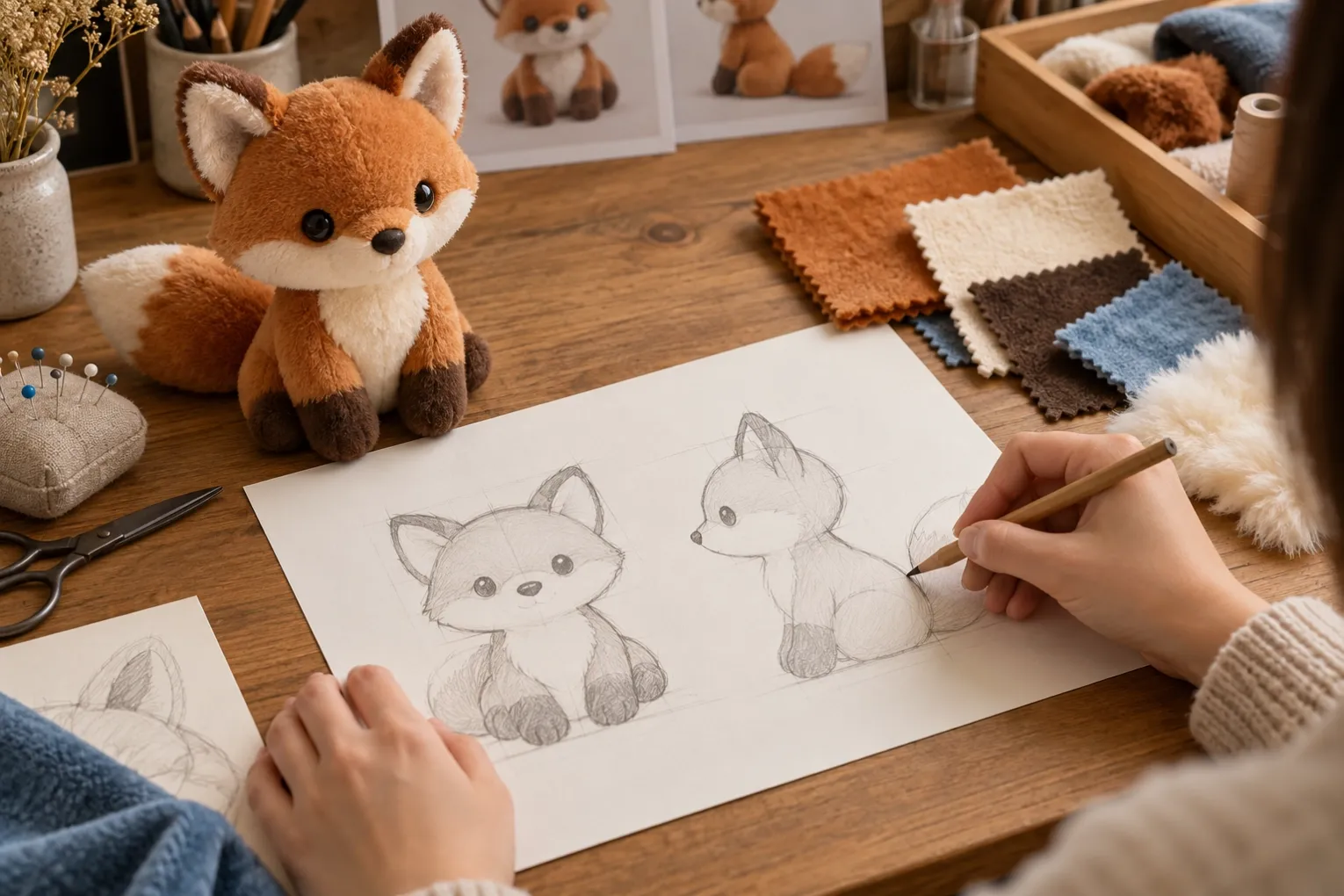
A drawing does not always behave like fabric.
Very thin legs may not support a large body. Tiny printed details may disappear at a smaller size. A sharply pointed shape may become rounder once it is sewn and filled.
We review these details before sampling and discuss where changes might help.
The aim is to preserve what makes your character recognizable. That could be the angle of its ears, an unusually wide face, or a small, serious expression.
For some projects, simplifying a detail makes the finished toy look closer to the original idea. A clean embroidered smile, for example, may work better than trying to reproduce every line of a complex illustration.
3. Choose the Fabric, Colors, and Details
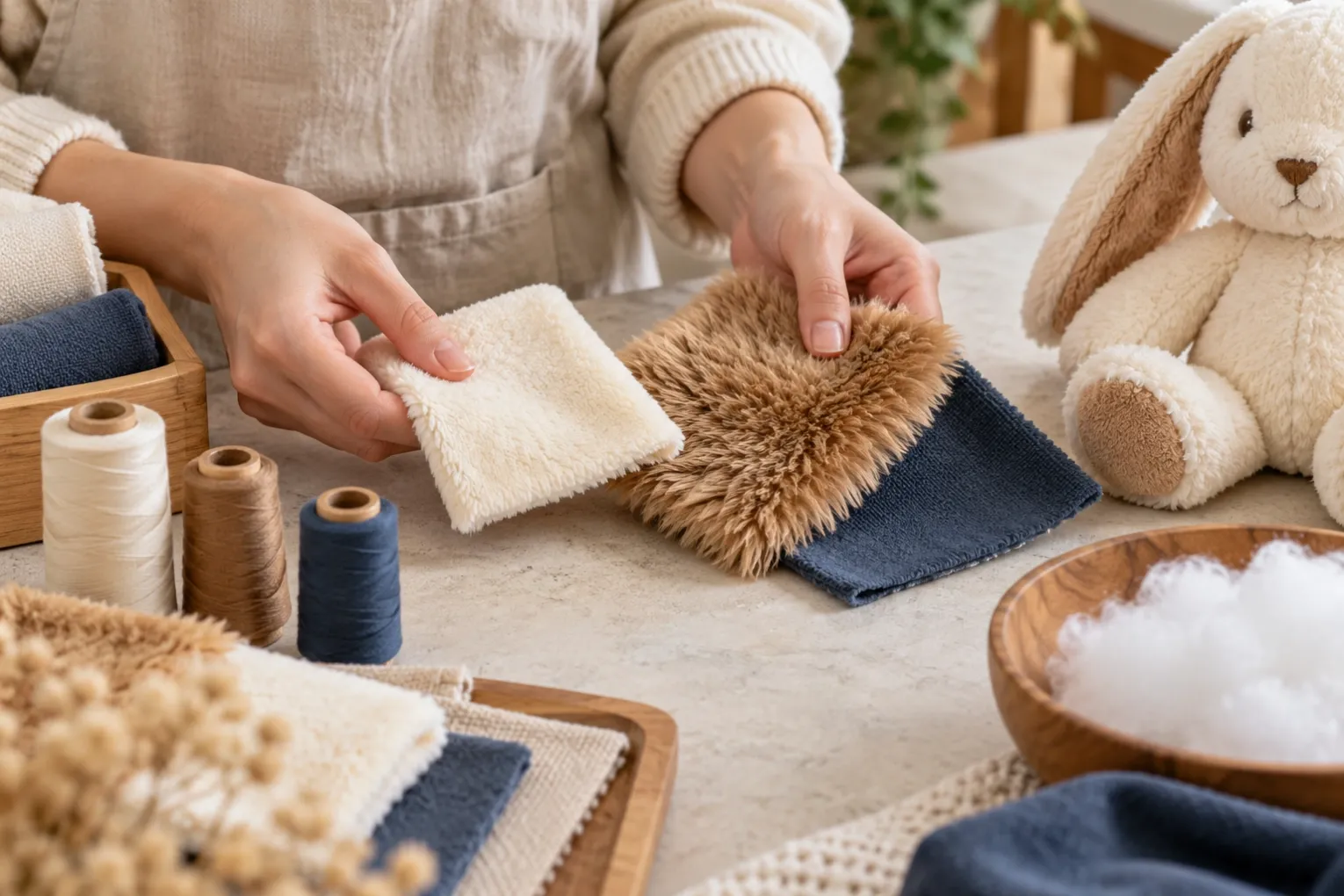
Fabric changes how a character looks as much as how it feels.
Short-pile plush can suit a design with clear facial details. Longer, fluffier fabric creates a different effect and may partly cover small features. Filling also matters: a firmly stuffed character holds its shape differently from a soft, floppy one.
We discuss these choices alongside details such as:
- Embroidered or printed features.
- Clothing and accessories.
- Fabric colors.
- Labels and hang tags.
- Individual or bulk packaging.
Colors on a screen are useful references, but they do not always match physical fabric exactly. Where color is especially important, physical swatches and agreed color references help make the decision clearer.
These choices also affect the price. Two custom stuffed animals of the same height can have different production costs because of their pattern complexity, materials, and finishing work.
4. Make the First Sample
The first sample is where the design becomes something you can properly judge.
A pattern is developed, the fabric pieces are cut and sewn, and the character is filled and finished. Once assembled, details that were difficult to judge on paper become obvious.
Perhaps the head needs to be wider. The arms may sit too low. The face might be well made but still feel slightly different from your character.
That is what sampling is for.
We review the sample with you so you can assess its proportions, expression, materials, and overall finish. Photos help with visual feedback; handling a physical sample lets you assess the feel as well.
5. Refine It With Specific Feedback
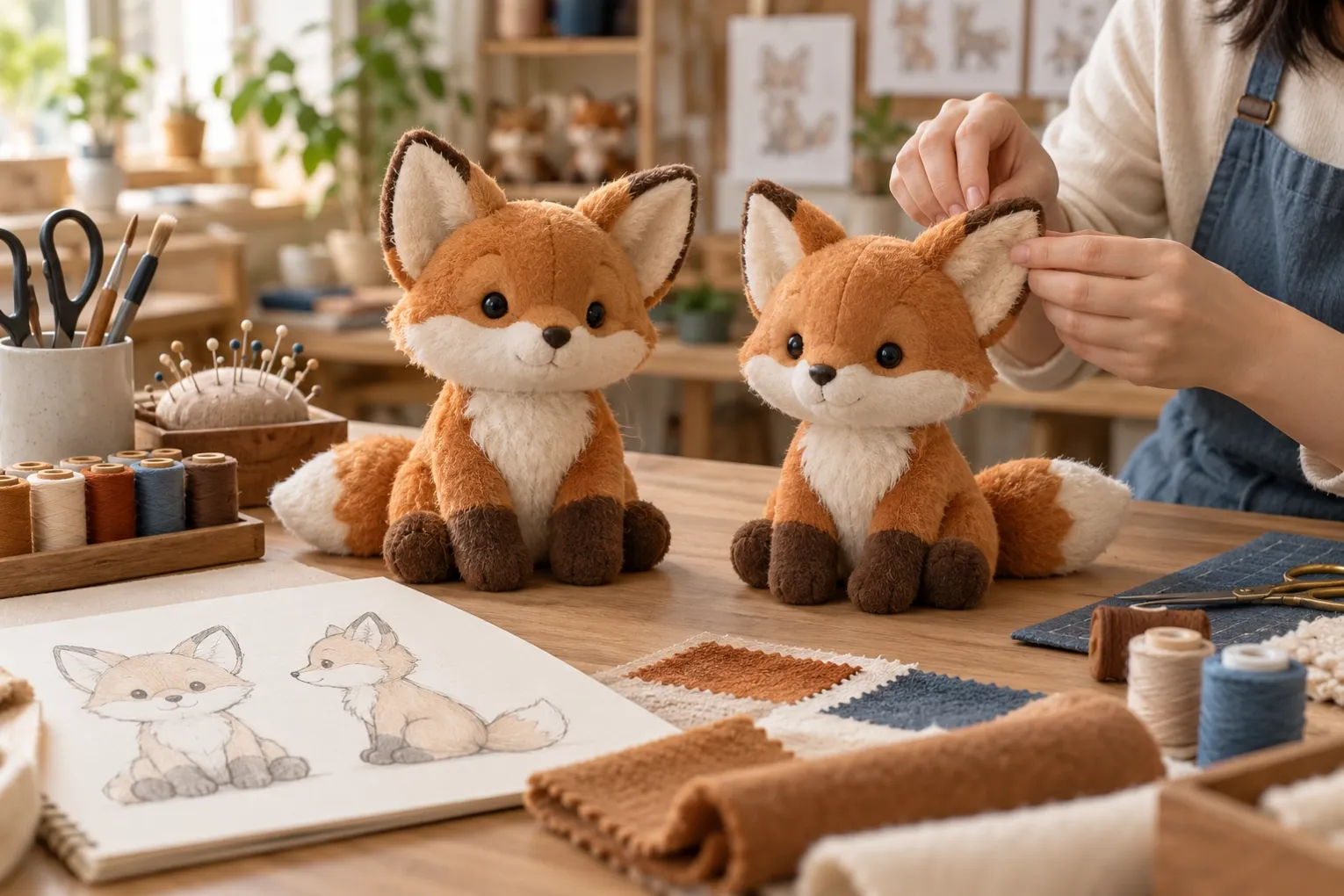
The most useful feedback is concrete.
Instead of “make it cuter,” try “bring the eyes slightly closer together” or “make the cheeks fuller.” If possible, mark the changes on a photo.
It also helps to collect feedback from everyone involved before requesting a revision. Separate comments from a designer, purchasing team, and brand manager can otherwise lead to conflicting changes.
Sampling may involve revisions, so the number of revisions, related charges, and expected timing should be agreed as part of the project.
Before production, we confirm the approved sample and the details that go with it, including size, materials, colors, labels, and packaging.
6. Move Into Production
Once the sample and order details are approved, production can be arranged.
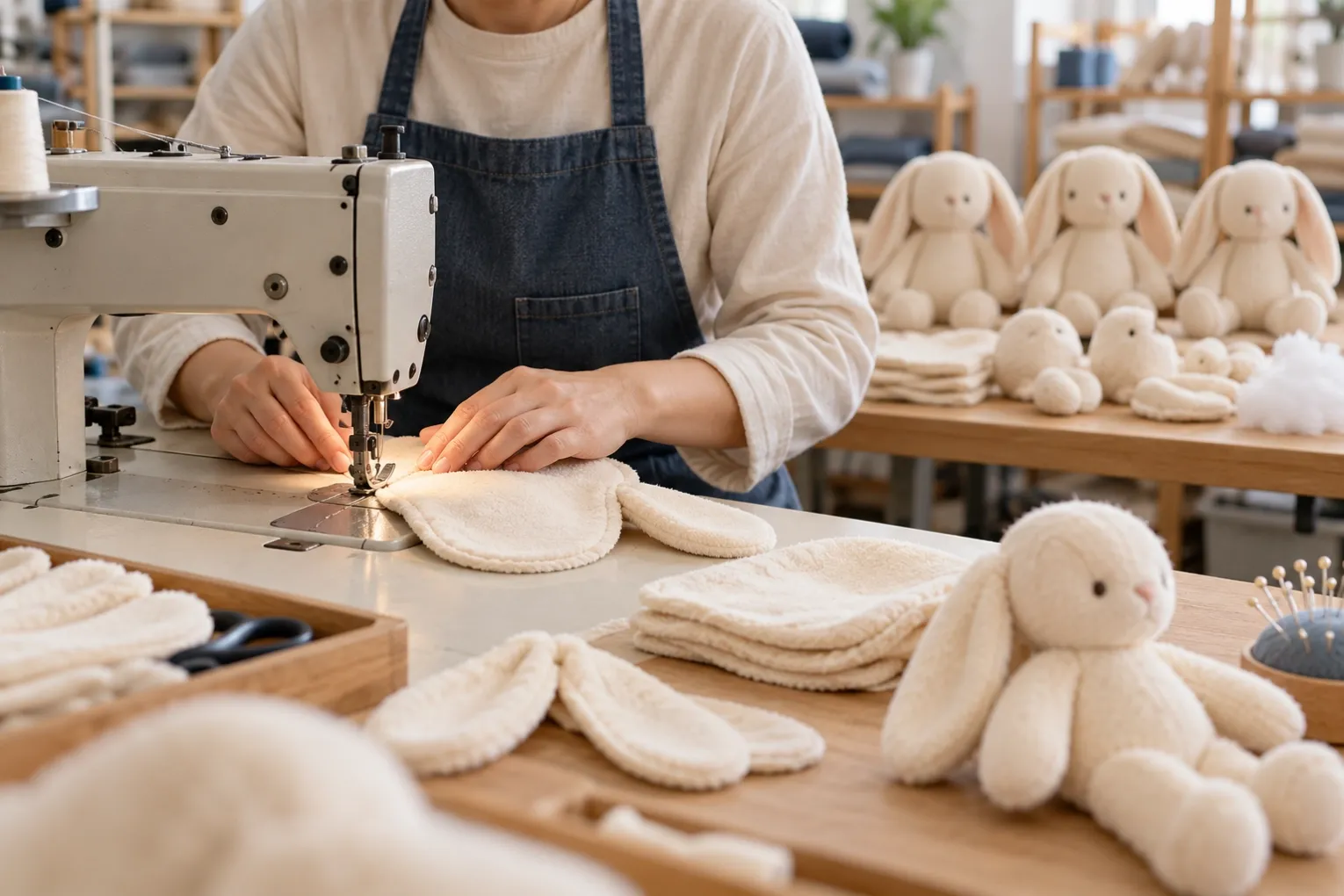
Fabric is prepared, panels are cut, and components such as embroidered faces or clothing are made. The pieces are then sewn, filled, closed, and finished.
At this stage, the approved sample serves as the reference for the order.
Changes after approval can affect materials, pricing, and delivery dates. If you are still deciding on a logo, label, or accessory, it is better to settle it before production begins.
Tell us early if the order is tied to a launch or event. Your schedule needs to allow for sampling, feedback, production, and transport—not just the time spent sewing.
7. Check the Finished Toys
A good-looking sample is only part of the job. The finished order needs attention too.
Quality checks can cover appearance, measurements, stitching, embroidery, filling, labels, and packaging against the agreed requirements.
Product safety testing is a separate consideration. The applicable requirements depend on the intended age group, product design, and market where the toy will be sold. We discuss any testing and documentation needs as part of the project scope; a visual inspection alone does not establish compliance.
8. Pack and Arrange Shipping
Plush toys may be light, but they can take up a surprising amount of space.
Packaging affects both presentation and shipping costs. Some designs may suit compression packing, while others need more room to protect their shape or accessories.
We help coordinate packing and compare available shipping options based on the order’s size, destination, and schedule.
If you need delivery to a warehouse, business address, or fulfillment provider, share the receiving requirements before dispatch. Carton labels and packing instructions are much easier to prepare while the goods are still being packed.
What Should You Prepare Before Requesting a Quote?
You can start with a short message:
We would like to make a custom plush toy based on the attached artwork. Our target size is approximately 25 cm, and we are considering an initial order of 500 pieces. The toys will be sold in the US. Please advise on sampling, materials, packaging, and estimated timing.
Those details are examples, not minimum order requirements. If you are unsure about size or quantity, say so—we can discuss the options before the specifications are finalized.
Have a Character You Want to Make?
At Fomecion Group, we help customers develop custom plush toys and coordinate the steps from sampling through production and shipping.
Send us your artwork, approximate quantity, and intended use. We will review the idea with you and explain what needs to happen next.